The Indian Wine Market – bite-sized overview!

I attended a talk on 21 September organised by Austrade (the Australian Trade Commission) and the Onkaparinga Exporters Club – a regional body that directly assists exporters. The speaker, Mahesh Krishnan from Austrade Mumbai, gave a clear and concise briefing on the Indian wine market – its stage of development in terms of demand/consumption patterns; strategies for entering the market; and the key market challenges facing potential suppliers, particularly those from Australia.

The talk was attended by a select group from South Australian wineries already sending wine to India, including Woodstock and Patritti (which sends de-alcoholised wine); from the South Australian Department of Trade and Economic Development (DTED); from Tradestart (Austrade); and from the University of Adelaide’s Wine2030 group.

The key message that came through was that the Indian wine market is undergoing rapid and significant growth and with the appropriate approach there are opportunities for Australian wineries to become part of it.

Key recent trade developments for exporters are:

2001       Quantitative restrictions on imports to the Indian wine market were lifted

2003       Hotels were allowed to purchase wine duty free

2007       Import duty was reduced to 150 percent from much higher levels and made uniform across the country.

Wine prices in India

On top of the 150 percent import tax there are state taxes that differ across states. Prices for wine tend to be 10 to 13 times the FOB price for duty paid wine and 5 to 8 times the FOB price for duty free. There is then the 300 percent mark-up on hotel wine sales. There are signs that these margins will come down and this has started with some chains such as Four Seasons.

There is a push for uniform laws and taxes across the 28 states but until that time each state must be treated as a separate entity with labels and vintages needing to be registered separately in each state.

In future there is the possibility, even likelihood, that the import duties and state duties will be reduced. The Free Trade Agreement between Australia and India is at an advanced stage and expected to be complete and in place inside a year. Furthermore, there is pressure from the WTO and from Europe to reduce taxes.

Role of hotels in India’s wine market

The hotel chains in India account for about 75 percent of the country’s wine imports so the ability to import wine duty free is of great importance to the wine market. Hotels have about 100,000 rooms and this is predicted to rise by another 55,000 by 2013.

The vast majority of Australian wineries already in India are selling through the hotel chains in small volumes, with examples including Henschke, Taylors, Grosset, Cullen, Howard Park, Fox Creek, Penfolds and Yalumba.

[It was noted that there was a hiatus of about 18 months when hotels suspended buying in wine from overseas due largely to the financial crisis, terrorist attacks and the wine supply glut, but they have recommenced importing so this lull is over.]

Key patterns in consumption and production

On the supply side, both domestic production and import levels have grown rapidly in recent years as shown:

2003/2004           domestic production 423,000 cases          imports 80,000 cases

2008/09                domestic production 1.3 million cases     imports 175,000 cases

These figures reflect the strong and growing wine sector in India, with the main wine region being Maharashtra.

The main areas of growth are with the younger generation and with people who are travelling overseas, including business travellers and students, who experience the wine culture overseas, as the older generation remain predominantly drinkers of whisky and other sprits and beer. About 12 million Indians travelled overseas in 2009 and this is expected to reach 50 million by 2020, so Indian people will become more and more exposed to, and knowledgeable about, wine. Alongside this trend, there is a growth in the number of wine clubs, wine bars and education provision about wine.

It is also important to understand the cultural shift in India that is affecting the involvement of women in the wine market. Until very recently, it would have been a social taboo for a woman to buy wine. However, with supermarkets selling wines, women are now comfortable buying wine in this setting.

Also related to the cultural shift is the increasing presence of wine at promotional and social events. For example, at product launches it is usual for wine to be provided.

Customers like to know about wine show awards and ratings of wines by critics such as Robert Parker and wine media such as Wine Spectator. This gives the wines a competitive edge.

Around 70 percent of India’s retail wine market is ‘budget’ wine, with FOB prices up to A$3.00 (which after taxes translates to A$27). The next 20 percent is in the medium range, with FOB prices up to A$8 (retailing at A$27 to A$32), and the remaining 10 percent is premium priced wine. Hotels tend to focus their sales on premium ranges – the higher priced wines, while also providing some budget wines.

In India the consumption of wine is largely seen as separate to food. Mahesh gave the example of an event where the guests would typically have a glass of wine before a meal, then have water with the meal, and resume drinking wine after the meal was over. Food and wine matching is a new concept to most Indians.

Australia’s share of India’s wine market

Australia has captured 16 percent of the Indian imported wine market, second only to France with 45 percent. Other significant suppliers are Italy and the USA, with growing shares from Chile and South Africa.

Australian wineries shipped around 27,000 cases of wine to India in 2009. There are numerous Australian wineries shipping to India including small, medium and large wineries. Companies such as Yellowtail, Jacob’s Creek and Hardy’s have captured the lower price ranges, while the majority of Australian wineries are supplying the higher price brackets.

How to maximise Australia’s potential in India’s wine market

The key message that Mahesh gave was that relationships are at the heart of successful trading relations with Indian importers and distributors. Importers want their suppliers to be in the market for the medium to long-term, rather than short-term contracts. They want access also to the principals, as opposed to a representative of the supplier.

In building these relationships, it is recommended to visit the hotels and importers and retail outlets in person, at least once a year, and understand the market that is being targeted. There are lessons to be learned also from France in particular has managed to capture such a large share of the market. For example, France has sponsored visits for Indian buyers and hotel managers and decision-makers to France to see the wine regions and to understand and appreciate their wines. Italy has followed the same approach with great success. Along with wine dinners and other promotional events and media in India, this raises brand awareness and has led to a  degree to loyalty and familiarity with wines from these countries.

The AWBC has followed this approach towards Chinese wine markets, sponsoring visitors to Australia’s wine areas. This strategy, if considered viable, would also be helpful for Australia’s access and success in the Indian wine market.

Mahesh considered that Australia has a competitive advantage already in some aspects of its wines – particularly in having a forward fruit style, clear labelling, and affordable and approachable wines. It remains to be seen how Indians will see Australian wine matching Indian food. For example, Australian shiraz, its icon export varietal, may be marketed as a great accompaniment to India’s spicy food. Winemaker dinners are becoming increasingly common in India. This is one avenue to get this message across.

Trade shows are also a key avenue into understanding the Indian wine market and meeting with the decision-makers. Examples of trade shows coming up are:

See Revisiting the Indian wine market for a January 2012 update by Tigs.

Cheers!

Tigs
@WineSupporter
Posted in Wine news | Tagged , , , , | 5 Comments

Say it properly! Merci!

I feel like a rant, provoked by a couple of recent articles.

According to the UK’s Telegraph online there is widespread mispronunciation of wine words in England – basically because most wine words we have commonly adopted are French, Italian, Spanish or German. I have lived in NZ and now live in Australia and the phenomenon is certainly no better, if not worse, in countries where it is not common for people to learn any language other than English. Therefore attempts at foreign pronunciation are laughable at best and cringe-worthy at worst. Any French word is mangled beyond belief, which is a shame for such a beautiful language and one at the heart of wine culture and history. Recent advertisements by McDonald’s on Australian TV include a number of French words all pronounced with a totally Australian accent – gourmet – with a heavy T; piece de resistance, etc. Makes me sooo mad…

I work in the wine industry and am amazed that people who also work full time in the wine industry (and therefore should make an effort with the associated languages) have no respect for the pronunciation of words central to their business.

My pet hates are:

Shiraz being pronounced like syrah with a ‘sh’ – i.e. making the z silent. No language in the world has a silent ‘z’ – at least none of the mainstream languages that use the word shiraz. The word is shiraz and rhymes with jazz. The reason I am told for this bizarre pronunciation – we have always said it like this. Yeah well, they ‘always’ burned witches until they learned better.

On the subject of shiraz, the French word for shiraz is syrah – pronounced see-rah – NOT sigh-ra! Oh boy that one gets me.

Sauvignon blanc – the ‘c’ is silent – it is NOT blonK. Grrrr

Sémillon – the ‘l’ is not pronounced as in English. The double ‘l’ produces a ‘y’ sound  semi‘y’on.

Riesling – it is not made from rice and does not rhyme with it! It is a German word – it is pronounced ‘reesling’ and the ‘s’ is not as soft as the English ‘s’.

Pinot (as in pinot noir and pinot gris) – the ‘t’ is silent. It’s not hard! And it is ‘no’ as in no not yes, NOT not!

Petit (as in petit verdot) – the last ‘t’ is silent in both words. It is only pronounced if followed by a vowel.

That will do for now and I feel vented. If just one person stops MURDERING French pronunciation I will be a lot happier.

Thank you!

Tigs

Telegraph’s recent articles:

http://bit.ly/9Tcp7j

http://bit.ly/b8w0Xq

Posted in NZ wine, UK wine | Tagged , | Leave a comment

Better or wurzer?


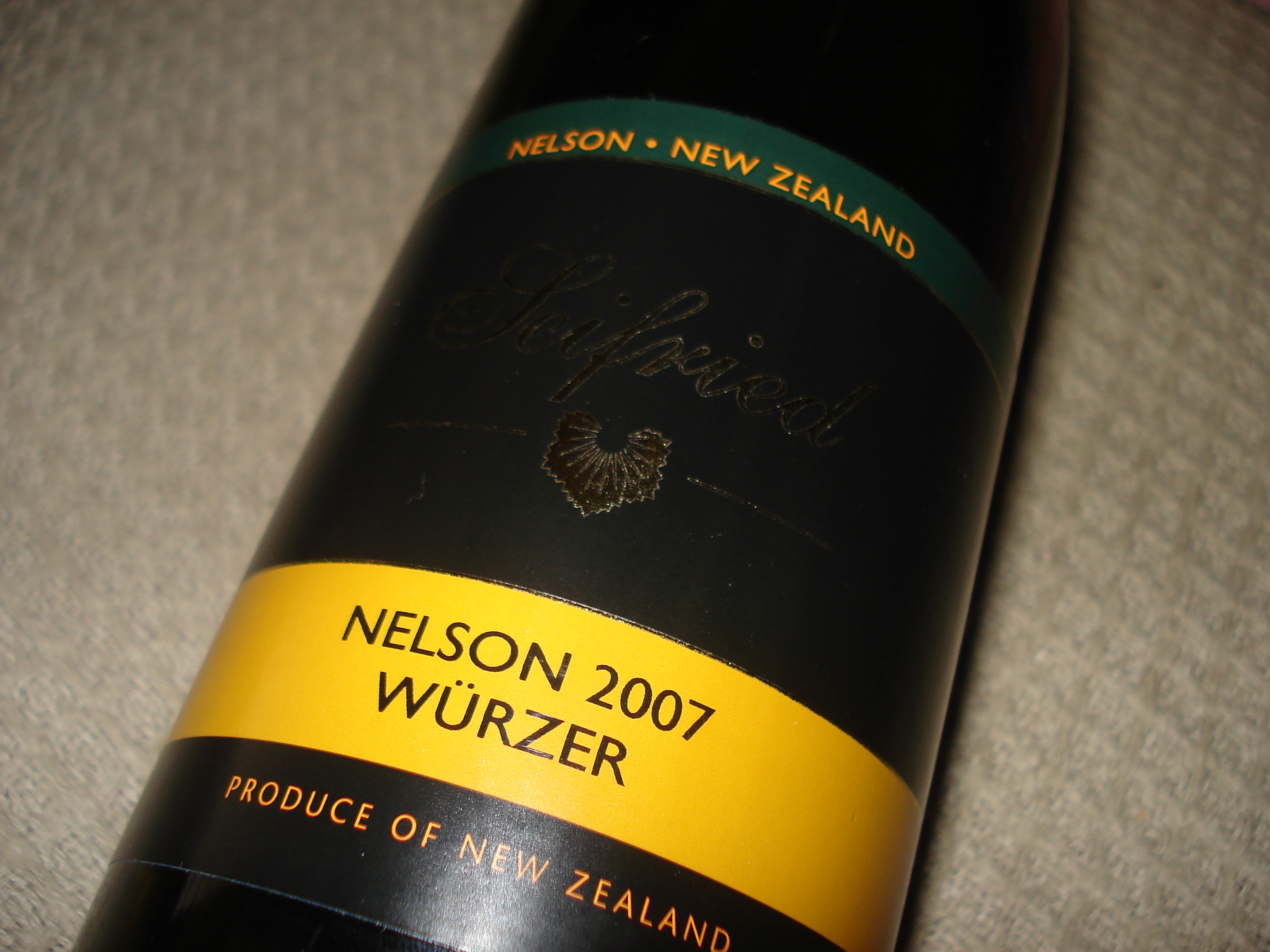
On my trip to NZ earlier this year I came across a wurzer, a wine I had never heard of – so I had to have it, especially as it had a name similar to one of my favourite varietals – gewurztraminer. Seeing that it was a Siefried wine from Nelson, the north-western tip of the South Island, I knew it was worth the risk of buying without trying, and it did not pose a great monetary risk at just NZ$20.

A light golden colour it has a fresh luscious nose of honeysuckle, peach juice, fresh apricots and apple sauce with a slight smokiness. The palate was soft, round and generous with sweet white fleshy tropical fruit cut through with zingy spice, and a long drying finish.

As I poured another glass I liked it more and more, although it was slightly hot and at 13.5% would benefit from lower alcohol in my opinion – I am not an expert just a passionate consumer. But overall a clear thumbs up from me!

Posted in Gewurztraminer, New World wine, NZ wine, Wine varietals and blends | Tagged , , , , , , | Leave a comment

Drink wine by the glass and waste none

This article in the Asia Sentinel describes a new affordable and effective method of keeping wine fresh once opened – so a glass of wine at a time does not mean the rest of the bottle is wasted if not drunk within a few days. The product is from a company called Winesave.

I am a fan and owner of a Vacu Vin, a device which the author of this article, Curtis Marsh, calls “the most commercially popular alternative to displacing oxygen without using an inert gas”. This device simply pumps air out of the bottle and creates a vacuum so that the wine does not spoil. It also helps if the bottle is then refrigerated until needed. Marsh states that it is used in 30 million households in more than 75 countries.

While I often promote this device to friends it is true thaat it does not accurately measure the pressure so it is a bit “hit and miss”. However, it is also true that once you have one it never runs out!

The new device by a company called Winesave uses argon, a naturally occurring gas that is heavier than air, and has the advantage of being resistant to bonding with anything – therefore a small squirt into an open wine bottle sees the argon sink to settle between the wine and the air, forming a protective layer. Marsh states that “with the bottle kept upright and relatively cool, will preserve wine for weeks, indeed months”. He has tested it on young an old wines, on a range of wines styles and varietals and says thaat all were fine after two months.

The argon can be obtained easily through liquefaction of gases and fractional distillation. It is a natural product, environmentally friendly, comes in a recyclable can and the argon ultimately returns to the atmosphere, where it came from.

A canister retails for A$28 in Australia and the manufacturing company Winesave suggests that each canister has at least 50 applications.

Read the full article here

Posted in Wine news | Tagged | Leave a comment

Is Facebook killing your website?

Social media consultant Jay Baer writes about what he calls Facebook’s three-pronged attack on websites. Very much worth a read…

http://bit.ly/clVc5p

Posted in Social media | Tagged | Leave a comment

Montana? No – Brancott Estate

Montana, one of the best known and largest wine brands in NZ, is changing its name to Brancott Estate. It is already known by the new name in the US. Pernod Ricard NZ, the owners of the Montana brand, say that it makes sense to name the wine after the Brancott Vineyard which was Montana’s original Marlborough vineyard and where sauvignon blanc was first planted in Marlborough.

http://bit.ly/cLB8bf

Posted in New World wine, NZ wine, Wine news | Tagged | 1 Comment

Learn about the UK wine trade at Plumpton

Plumpton College in south east England is offering a course to learn about the UK wine trade. The four month course covers marketing, grapegrowing and winemaking with a UK focus. 

It is expected to appeal to people from wine-producing countries outside the UK who want to sell into the highly competitive UK market as well as those looking to enter the UK wine trade.

http://bit.ly/d0XUMv

Posted in European wine, UK wine, Winemaking, wine appreciation and viticulture courses | Tagged | Leave a comment

When the Kiwi and Aussie stars align…

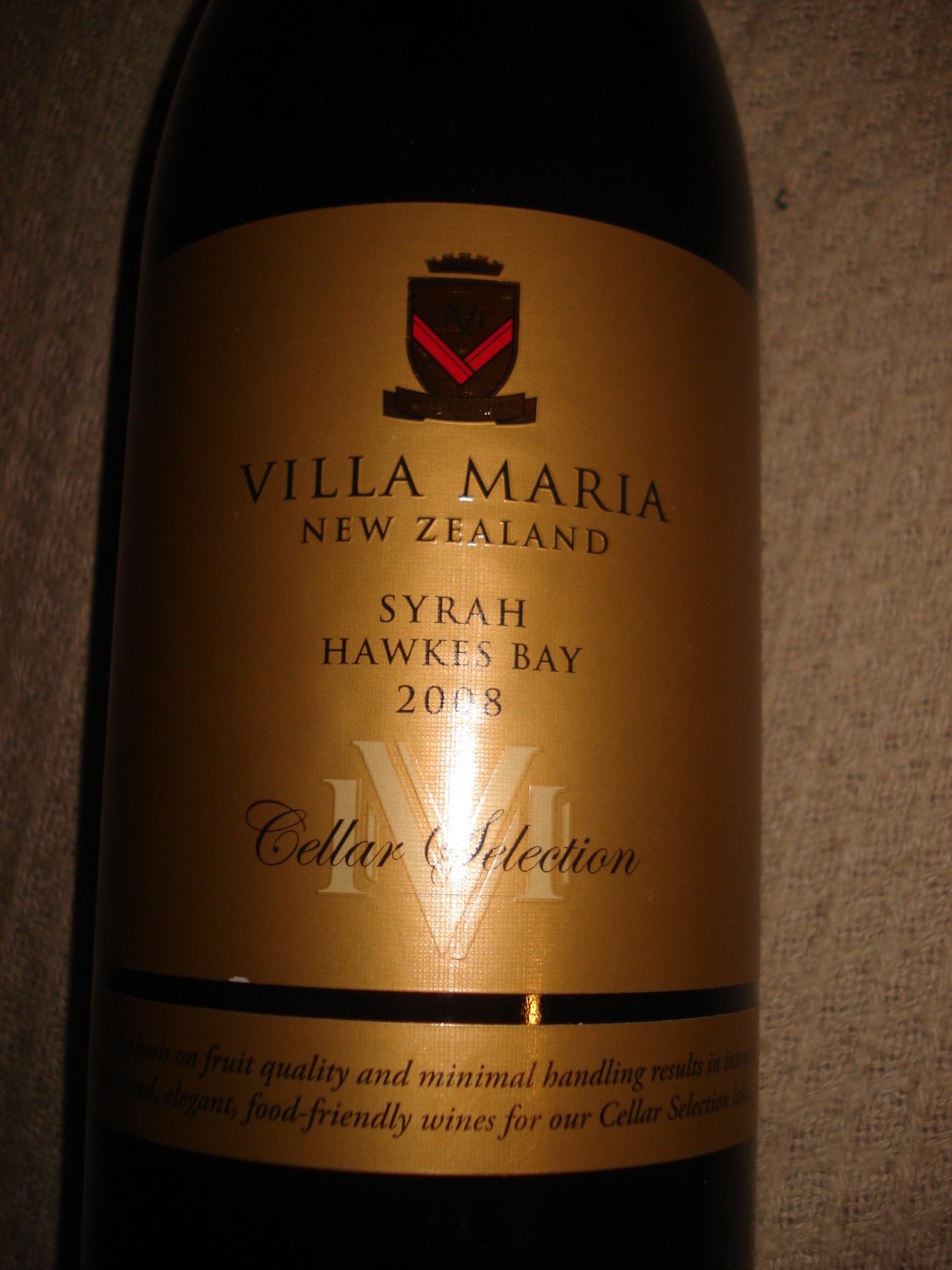
I met up with some wine-loving friends for dinner and my contribution to the wine supply was Villa Maria’s 2008 Cellar Selection syrah from Hawke’s Bay, another acquisition from my recent trip to NZ. Everyone contributed their views as I jotted down my notes for this blog – spicy, peppery and very nice got several hits!

A wonderful deep red/purple plum colour, just the colour of the skin of a black plum right next to the flesh as you peel it back… A typical Hawke’s Bay syrah, it has a spicy black pepper and anise nose, but there was so much more, with layers of rose petal, red cherry and sweet berry fruits. The palate descends into savoury, cherry and blackberry flavours, and a peppery and spicy overtone, caressed with silky tannins, the flavours perfectly integrated and harmonious. A long, dry and grippy finish rounds off a delightful Villa Maria wine, a winery that has yet to disappoint.

Best food matches would be game – maybe duck, rabbit or lamb shank but the consensus in our group was that it would be perfect with kangaroo fillet – a Kiwi Aussie marriage made in – well, Hawke’s Bay and outback Australia.

Alcohol 13.5%

Tigs xxx

Posted in New World wine, NZ wine, Syrah/Shiraz, Wine varietals and blends | Tagged , , , , | 1 Comment

Chile avoiding wine discounting

Chile is not prepared to follow the Australian and NZ examples of heavily discounting its wine exports. In this article in the drinks business Chilean producers are said to be shunning cut-price deals with the UK off-trade. Instead they are looking to improve their reputation for good quality wine and thereby retain and improve margins on sales. Severely hit by a loss of 20m litres of wine in this February’s earthquake, it is a brave and perhaps necessary stand by this major wine exporter.

http://bit.ly/94tYVU

Posted in New World wine, Wine news | Tagged | Leave a comment

Exclusively serving English wine!

English wine is on the up!

With similar terroir to parts of France and a warming climate, and queues of winemakers from overseas keen to take advantage of the lack of constraints that exist in other European winemaking countries, it really should come as no surprise that English wine is making its name.

The Bricklayer’s Arms pub in Putney, Surrey, south of London – and a very nice area – is now serving English wine only. It was already serving English-only beer – which has always been regarded as the best in the world and an English passion. But the wine – a different matter. 

Residing in Australia but with English heritage I have read with interest about the prize-winning sparklings from Nyetimber and Camel vineyards, and this pub has sparklings from Ridgeview Vineyard (East Sussex).

Northern French and German grape varieties seem to be favoured for obvious reasons. Pinot blanc from Chapel Down (Kent) and the white blend called Surrey Gold from Denbies (Surrey) which I did try on a recent visit to the UK and really enjoyed it – opulent fruit, with an oiliness reminiscent of an Alsatian (not the dog…) and at a low price – it was 5.99 sterling from Waitrose. I also recall that the standout varieties for me at Denbies were varieties I had never come across before that day – including Bacchus and Ortega. They were so well suited to the climate and terroir and are included in the Surrey Gold blend.

For red wines, this pub has pinot noir from Bolney Wine Estate (Sussex), gamay from Biddenden Wine Estate (Kent) and a blend of dornfelder and rondo from Dark Harvest.

I know where I’m headed when I get back to the Old Dart…

See full article in The Drinks Business at:

http://www.thedrinksbusiness.com/index.php?option=com_content&task=view&id=11550&Itemid=66

Cheers all!

Tigs

Posted in UK wine, Wine news | Tagged , | Leave a comment